
AI in Cybersecurity: A Double-Edged Sword
Artificial Intelligence (AI) is reshaping cybersecurity, serving as both a powerful defense tool and a weapon for attackers. On the positive side, AI enables real-time threat detection, vulnerability assessment, predictive intelligence, and automated response, strengthening digital defenses. Yet, hackers exploit AI for adaptive malware, phishing, and deepfake-driven attacks. This double-edged nature demands a balanced approach.

AI in Cybersecurity: A Double-Edged Sword
Introduction
Artificial Intelligence (AI) is reshaping cybersecurity, offering unmatched capabilities to detect, prevent, and respond to digital threats. From predictive analytics to real-time anomaly detection, AI empowers defenders with speed and precision that traditional systems cannot match. Yet, this same technology also fuels cybercriminals, enabling them to automate attacks, craft highly targeted phishing campaigns, and bypass defenses. In this blog, we explore how AI strengthens cybersecurity, how it is exploited by attackers, and what this means for the future of digital defense.
The Strategic Role of AI in Strengthening Cybersecurity Defenses
1. Vulnerability Assessments & Penetration Testing
AI has transformed vulnerability scanning and penetration testing by automating what was once manual and time-consuming. AI models can quickly analyze large systems, spot weaknesses, and even simulate realistic attack scenarios. For example, AI-driven platforms like Synack leverage algorithms to identify flaws that human testers may miss. This reduces human error, accelerates testing cycles, and ensures continuous monitoring. Organizations benefit from faster remediation, enabling security teams to focus on fixing vulnerabilities instead of manually searching for them.
2. Threat Detection & Incident Response
Traditional defenses rely on rule-based systems that often fail against new attack variants. AI changes this by using machine learning to recognize patterns, detect anomalies, and respond in real time. Darktrace, for instance, builds a baseline of “normal” network behavior and alerts teams when deviations occur. This allows earlier detection of insider threats, zero-day exploits, and advanced persistent threats (APTs). AI-powered incident response systems can also automatically isolate compromised devices, minimizing damage before attackers spread further.
3. Automated Monitoring & Anomaly Detection
Modern IT environments generate overwhelming amounts of logs and alerts. Human teams cannot monitor them all. AI solves this by analyzing data streams in real time, filtering false positives, and flagging high-risk anomalies. Platforms like IBM QRadar and Splunk use AI models to detect suspicious traffic, abnormal login activity, or unusual file transfers. Automated monitoring ensures around-the-clock security without fatigue, making it possible for organizations to maintain visibility across hybrid infrastructures, cloud environments, and IoT ecosystems.
4. Predictive Threat Intelligence
AI isn’t limited to reacting, it can also predict attacks before they happen. By analyzing past incidents, hacker behaviors, and global threat feeds, AI generates predictive insights. This intelligence helps organizations proactively strengthen weak points before attackers strike. For example, predictive AI can warn banks of potential fraud trends or alert cloud providers of likely ransomware campaigns. These insights shorten response times and transform cybersecurity from a reactive stance to a proactive shield against evolving threats.
5. Fraud Detection & Identity Protection
AI is a game-changer in combating fraud and identity theft. Financial institutions use AI to monitor millions of transactions per second, instantly detecting suspicious activity. For instance, if a user’s account suddenly shows transactions in multiple countries, AI systems flag it for review. Similarly, AI strengthens authentication by using biometric verification such as facial recognition and voice identification. These tools help prevent account takeovers, reduce payment fraud, and safeguard sensitive customer data against unauthorized access.
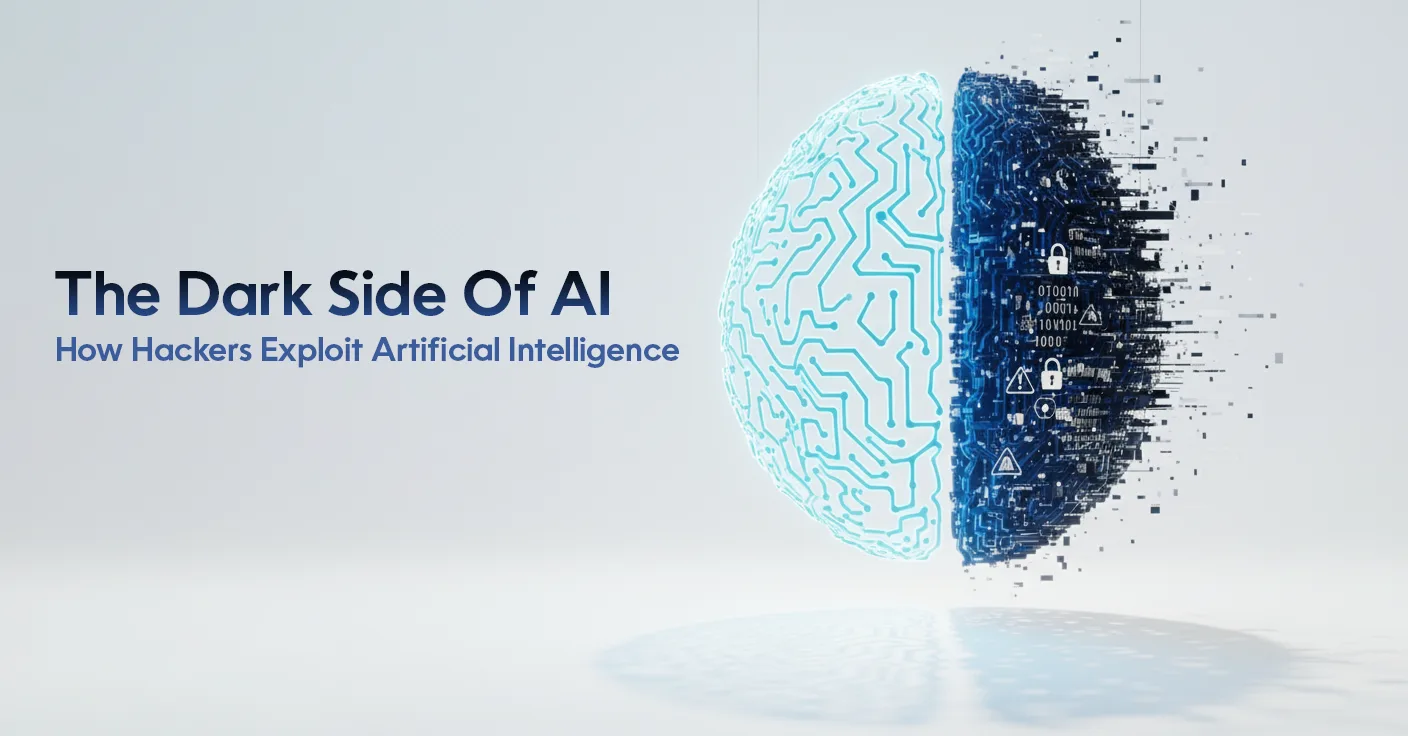
The Dark Side of AI: How Hackers Exploit Artificial Intelligence
1. AI-Enhanced Malware
Cybercriminals now weaponize AI to create polymorphic malware, code that continuously changes to evade detection. Unlike traditional malware, polymorphic variants can rewrite themselves while preserving functionality, making them nearly invisible to signature-based tools. Emotet, one of the most dangerous botnets, leveraged such techniques to infect systems worldwide. AI-enhanced malware can also adapt based on its environment, spreading stealthily and persisting longer within networks, creating massive cleanup challenges for security professionals.
2. AI-Powered Phishing & Social Engineering
AI is also fueling a new wave of phishing and social engineering attacks. Instead of generic scam emails, attackers now deploy AI-powered natural language models to mimic the tone, style, and behavior of trusted colleagues or executives. These hyper-personalized phishing emails trick victims into clicking malicious links or sharing credentials. Tools like DeepPhish automate spear-phishing campaigns by analyzing social media and communication data, making these attacks harder to detect. AI voice cloning even enables “CEO fraud” calls that sound eerily real.
3. Automated Reconnaissance & Exploit Kits
Reconnaissance, the process of gathering intelligence before an attack, has been supercharged by AI. Tools like Deep Exploit can autonomously scan systems, identify vulnerabilities, and launch tailored attacks without much human input. This automation significantly lowers the skill barrier for cybercriminals, allowing even inexperienced hackers to execute advanced exploits. With AI-driven reconnaissance, attackers can map entire networks, analyze employee behavior, and craft attack strategies far faster than traditional methods. The result: faster, more precise, and harder-to-detect breaches.
4. Deepfakes & Voice Cloning in Attacks
AI-generated deepfakes are no longer just entertainment, they’re a cybersecurity nightmare. Hackers can create convincing video or audio recordings of executives to manipulate employees or spread disinformation. Voice cloning, for instance, has been used in corporate fraud schemes where attackers impersonated CEOs to authorize fraudulent transfers. These attacks exploit human trust in familiar voices and faces, bypassing technical defenses. As deepfake technology advances, distinguishing real from fake becomes increasingly difficult, raising concerns for organizations worldwide.
5. Adaptive Evasion Techniques
AI also gives attackers the ability to evade security tools dynamically. Malware can use AI to analyze the environment it’s in and determine whether it’s inside a sandbox or real system. If it detects a security tool, it delays execution to avoid detection. Similarly, AI models can tweak attack patterns on the fly, avoiding signatures and fooling anomaly detection systems. This cat-and-mouse game creates major challenges for defenders, forcing them to continuously improve their own AI systems to keep up.
Real-World Examples of AI in Cybersecurity
1. Darktrace in Action (Defense)
Darktrace is a leading example of AI used for cybersecurity defense. Its self-learning algorithms analyze vast amounts of network traffic and establish a baseline of normal activity. When deviations occur, such as unusual data transfers or unauthorized access, it instantly alerts teams. In some cases, Darktrace’s autonomous response module can even take action, like isolating devices. This AI-driven approach has helped organizations across industries detect insider threats, prevent ransomware propagation, and respond to attacks in real time.
2. Emotet Botnet (Offense)
Emotet was one of the most destructive malware families, showcasing the offensive power of AI. Initially a banking Trojan, it evolved into a polymorphic malware that changed code frequently to evade detection. Delivered through malicious email attachments, it acted as a gateway for more serious payloads like Ryuk ransomware. By leveraging AI-based evasion techniques, Emotet spread globally, costing organizations millions in damages before law enforcement disrupted its operations in 2021. Its adaptability remains a model for AI-driven malware.
3. TrickBot Evolution
TrickBot began as a simple banking Trojan but evolved into a sophisticated AI-driven malware. It used machine learning to determine which types of attacks would be most effective against a given target. TrickBot adapted dynamically, spreading laterally across networks and avoiding detection with AI-guided evasion. Its modular design allowed it to expand beyond financial theft into ransomware delivery. This evolution highlights how AI can turn basic malware into a powerful, multi-purpose cyberweapon capable of global disruption.
4. Satori Botnet in IoT Attacks
The Satori botnet, a variant of the infamous Mirai, leveraged AI to attack Internet of Things (IoT) devices. Unlike earlier botnets that relied on static exploits, Satori used AI to identify vulnerabilities in connected devices automatically. It infected routers, webcams, and smart appliances, quickly scaling into a massive botnet capable of launching large-scale distributed denial-of-service (DDoS) attacks. This case highlights how AI-enabled automation magnifies the threat of insecure IoT ecosystems, which are already difficult to secure effectively.
5. DeepPhish Campaigns
DeepPhish is an AI-powered tool designed for spear-phishing. By analyzing online behavior and communication patterns, it creates personalized phishing emails that are nearly indistinguishable from genuine correspondence. These campaigns have proven far more effective than generic phishing attempts, dramatically increasing click-through and credential theft rates. DeepPhish demonstrates how attackers can use AI to weaponize data harvested from social media and corporate communications. Its rise underscores the urgent need for AI-powered defenses to counter AI-powered attacks.
Working on something like this? Tell us the part of it that stings most this week and we will tell you straight whether we are the right people for it.
Start a conversation